Español
 Italiano
 Português
 Français
 Deutsch
Tarimatec hosted a conversation exploring the relationship between sustainable materials, industrial innovation and contemporary interior architecture.
The discussion brought together Vicente Roselló, CEO of Tarimatec, and Joan Carles Navarro, co-founder of Estudio AIA. Rather than focusing on sustainability as a concept, the conversation examined how material development, manufacturing processes and design thinking come together to shape architectural spaces.
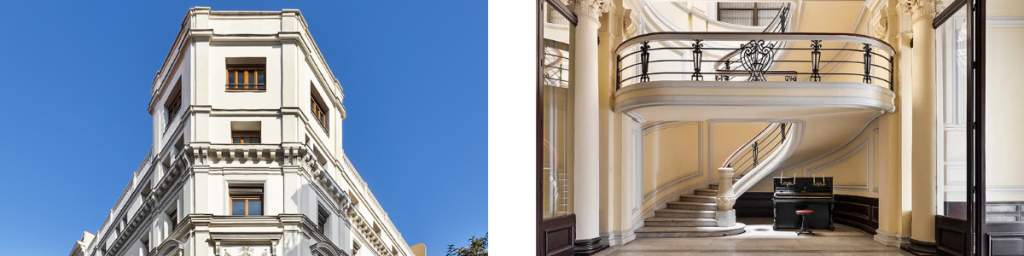
Held on 5 May at the Palacio del Marqués de los Vélez in Madrid’s historic Literary Quarter, the event offered a closer look at the role materials play in defining the future of interior architecture.
From Industrial Expertise to Material Innovation
Tarimatec’s origins lie in industry rather than design. The company began by developing technical profiles and bespoke solutions, building extensive expertise in manufacturing and material performance.
Over time, this technical knowledge led to experimentation with plant-based fibers and alternative raw materials. What started with wood eventually evolved into the use of agricultural by-products, opening new possibilities for sustainable material development.
Incorporation of rice husk
“We started working with rice husks and began testing their potential.” — Vicente Roselló
The result was a material that offered greater dimensional stability, durability and reduced maintenance requirements, while introducing a new approach to sustainable composite materials.

The Value of Process
During the discussion, Vicente Roselló highlighted the simplicity and efficiency of the manufacturing process.
“Powder goes into a machine and a profile comes out.” — Vicente Roselló
Yet the significance of the material extends far beyond production. Its true value emerges through its application in architecture, where performance, aesthetics and longevity must work together.
Estratos: Material as Architecture
El material como sistema arquitectónico
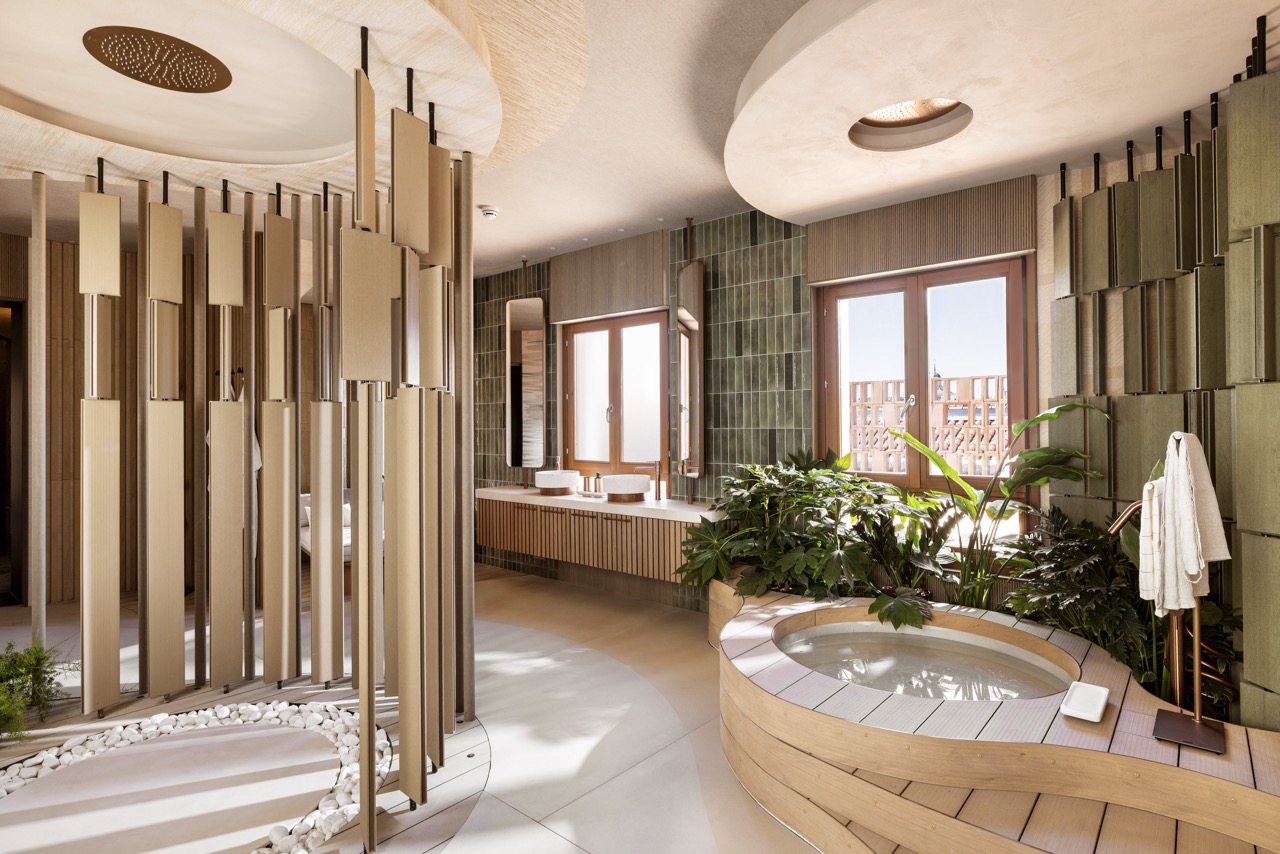
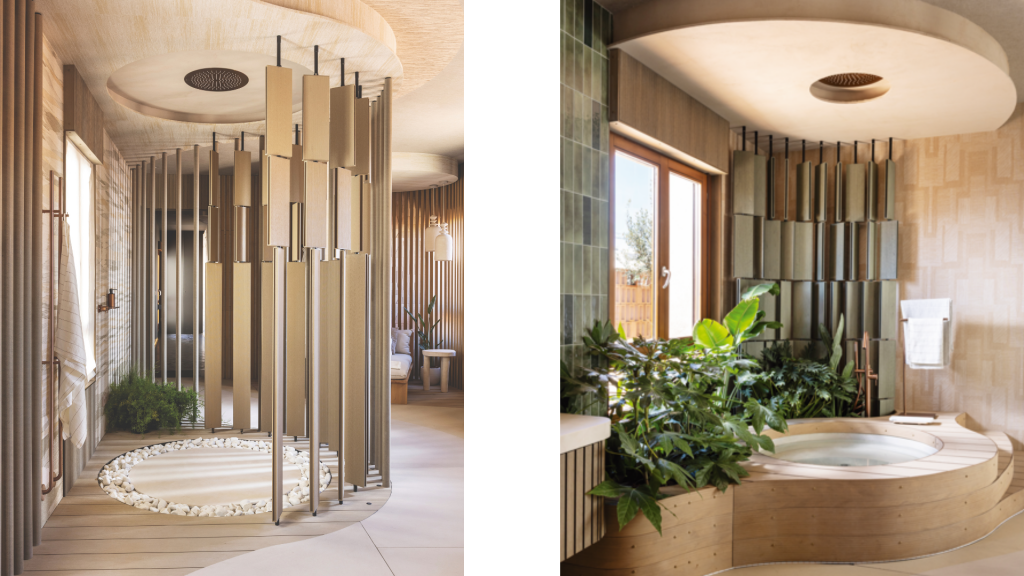
This idea is clearly expressed in Estratos, the Casa Decor 2026 project designed by Estudio AIA.
Rather than treating material as a finishing layer, the project uses it as a unifying architectural element. The same material language is applied across flooring, wall cladding, screens and partitions, creating continuity throughout the space.
The result is an environment where material becomes more than a surface treatment. It establishes structure, shapes perception and defines the overall character of the interior.
Rethinking Sustainable Materials
The introduction of rice husk transformed the way Tarimatec approached material development.
What might once have been considered a purely technical product became part of a broader architectural system—one that connects raw material, manufacturing process and spatial experience.
This holistic perspective reflects a growing shift within architecture, where sustainability is increasingly measured through performance, durability and responsible resource use rather than through marketing claims alone.
Sustainability through action
A recurring theme throughout the conversation was the importance of practicality.
Instead of focusing on sustainability as a narrative, the discussion centred on tangible improvements in manufacturing, efficiency and product lifespan.
For Tarimatec, sustainability begins at the source: in the way materials are selected, transformed and optimised throughout the production process.
AI, creativity and human judgement
The role of artificial intelligence also entered the conversation.
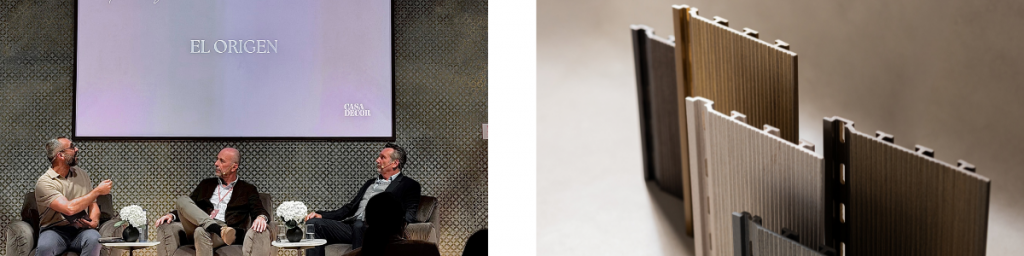
While AI is already part of many creative and professional workflows, both speakers agreed that technology remains a tool rather than a substitute for human creativity.
Ideas, storytelling, intuition and critical judgement continue to be fundamental to the design process.
Future of susteinable materials
Looking ahead
As the conversation turned towards the future, Vicente Roselló expressed a desire to continue expanding the possibilities of sustainable materials beyond traditional cladding applications.
“We were pioneers in using this type of material in Spain, and arguably across much of Europe. I hope we can continue developing new ideas and bringing new products to the market.” — Vicente Roselló
“The future is secure. We simply need to keep moving forward, keep exploring and keep creating.” — Joan Carles Navarro
Essential by Nature
The discussion continued long after the formal event had ended, reinforcing a shared belief among the professionals gathered there: materials are never just surfaces.
They influence how spaces are built, how they perform and how they are experienced.
For Tarimatec, material is not an accessory to architecture—it is one of its defining elements, shaping structure, atmosphere and the way people connect with a space.